10 Best Power Station of 2026, Ranked for Camping, Power Cuts and Garden Projects
The evening a winter storm knocked out our street's electricity, the thing I missed most wasn't the telly but the router and a working lamp, and that's the job most people have in mind when they look for the best power station. After going through UK roundups, maker spec sheets and amazon.co.uk listings, my pick for most homes and campsites is the Anker Solix C1000 Gen 2, a 1024Wh LiFePO4 unit with 2000W of AC output and a listed 49-minute recharge.
To be upfront about method: I haven't put all ten through a power cut of my own. This is a research-built ranking, several picks have no reviewer backing at all, and I flag them. If you only need to charge phones on a weekend away, the small units further down will do.

- Usable battery capacity: A 1024Wh battery. Enough for an evening of essentials in a power cut.
- Strong AC output: 2000W continuous and 3000W peak. Handles most household gadgets at once.
- Flexible charging options: Full recharge in 49 minutes at 1,600W. Solar input up to 600W.
- Plenty of outputs: Nine ports in total. Run lights, laptop and router together.
- Useful extra touches: Under 10 ms UPS switchover. TOU scheduling through the Anker app.
- Long-life LFP battery: LiFePO4 cells rated for 4,000 cycles. At least 80% capacity left after.
- App-gated fast charge: The 49-minute recharge must be enabled in the Anker app.

- Usable battery capacity: A 1070Wh LiFePO4 battery. A good weekend's worth for a campsite.
- Strong AC output: 1500W continuous with 3000W surge. Plenty for camping kit and tools.
- Flexible charging options: One-hour emergency charging via the app. A 30 dB quiet charge mode too.
- Plenty of outputs: Six ports including two USB-C. One of those does 100W PD.
- Useful extra touches: ChargeShield 2.0 protection system. Wi-Fi and Bluetooth app monitoring.
- Long-life LFP battery: LiFePO4 chemistry for long life. Rated for thousands of charge cycles.
- Two AC ports: Only two AC sockets are listed. Fewer than the Oupes or Allpowers.

- Usable battery capacity: A 1024Wh LFP battery. Same capacity class as the Anker.
- Strong AC output: The listing data is inconsistent on output. Check DJI's own figure first.
- Flexible charging options: Listed as solar-chargeable as well as mains. Useful off-grid.
- Plenty of outputs: Two 140W USB-C ports. Fast top-ups for laptops and drones.
- Useful extra touches: Listed as very quiet. Good news for a tent or bedroom.
- Thin listing: The listing gives few details. Several spec fields contradict each other.
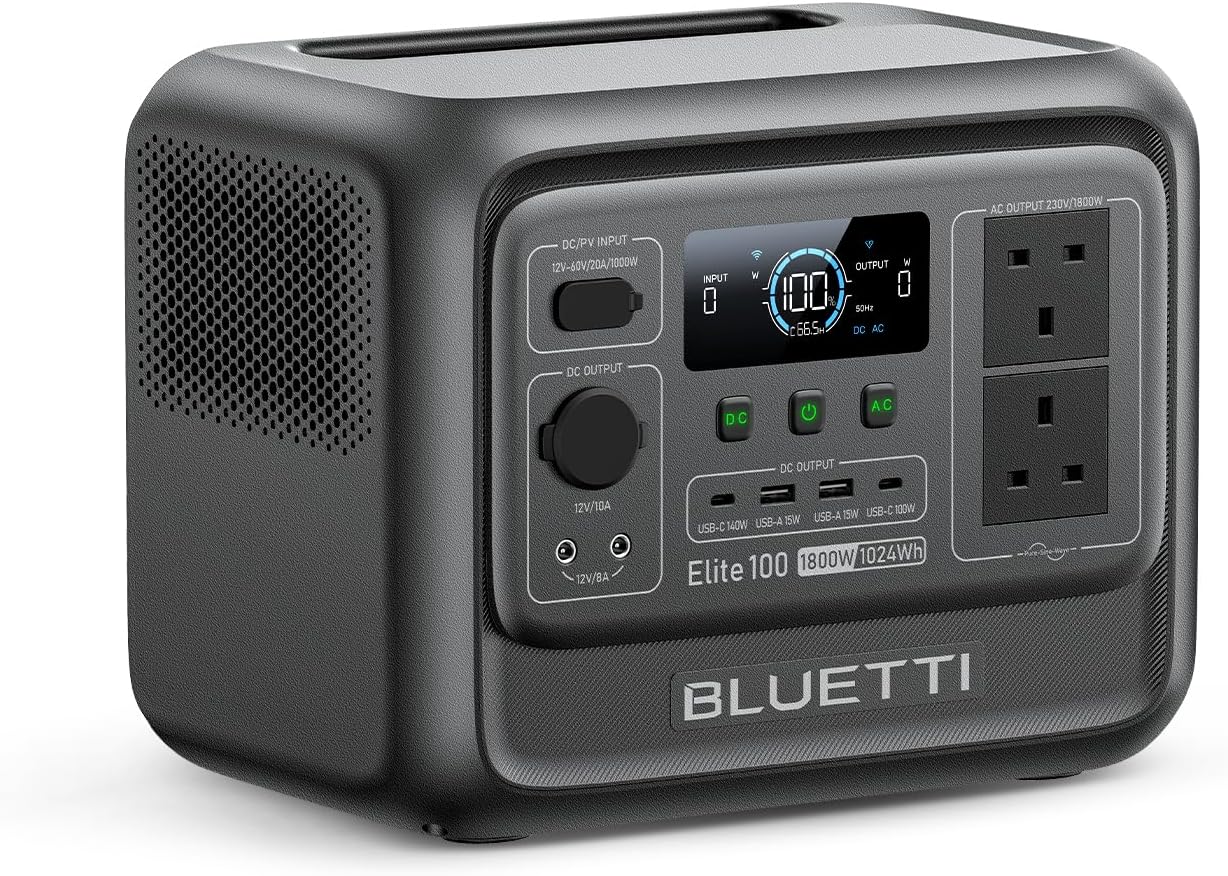
- Usable battery capacity: A 1024Wh LiFePO4 battery. Enough to keep a home office going.
- Strong AC output: 1800W continuous, 2700W with Power Lifting. Strong for its size.
- Flexible charging options: 1200W AC charging, full in about 70 minutes. Up to 1000W solar.
- Plenty of outputs: Nine devices at once, per Bluetti. Covers a whole desk setup.
- Useful extra touches: Under 10ms UPS switchover. A 30dB silent mode for overnight use.
- Kettle limits: An 1800W output won't reliably run a typical UK kettle. Don't plan on it.
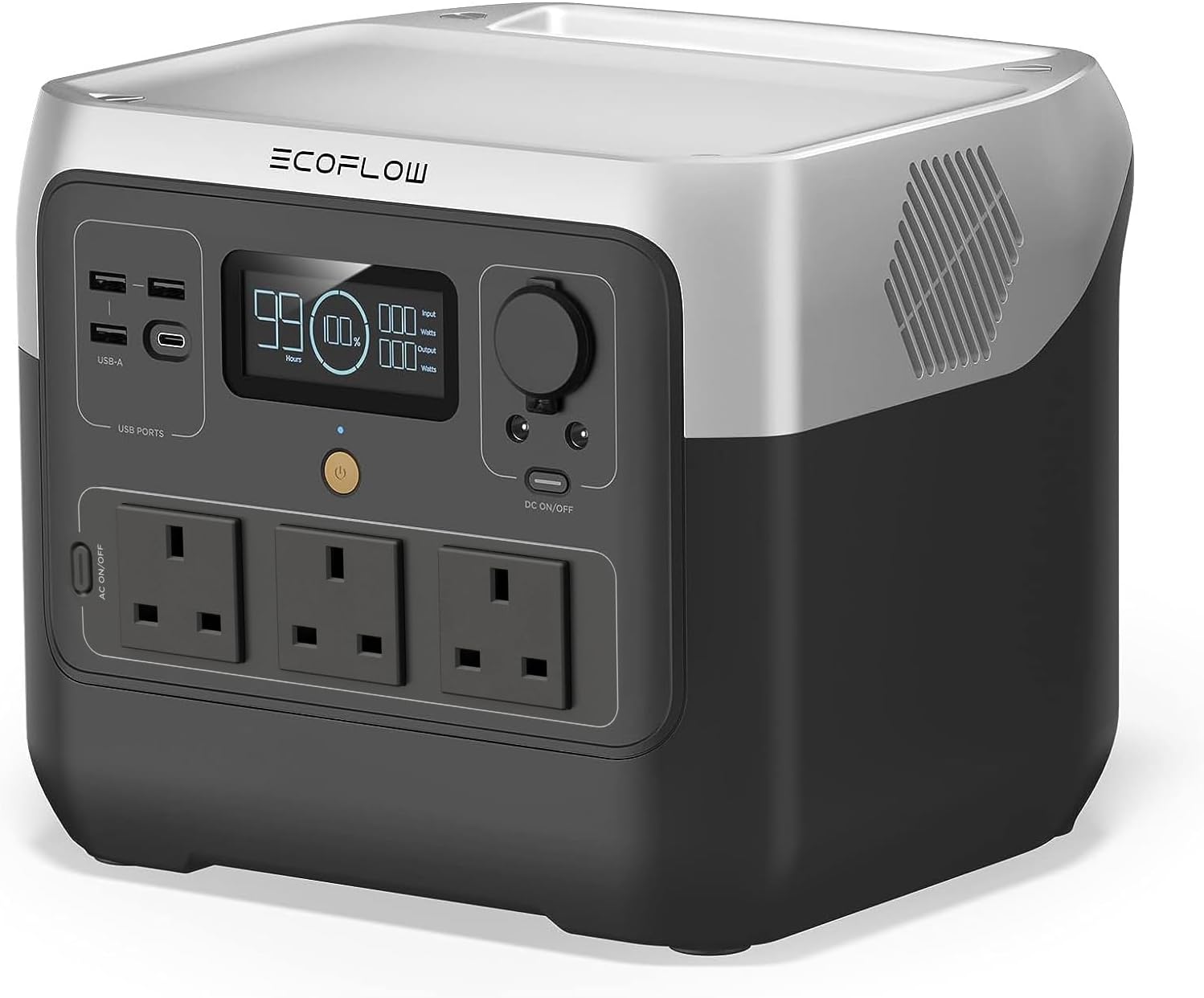
- Usable battery capacity: A 768Wh LiFePO4 battery. Right-sized for weekends and short cuts.
- Strong AC output: 800W AC, 1600W with X-Boost. Fine for camping kit and chargers.
- Flexible charging options: Full AC recharge in about 70 minutes. 220W solar in 3.5 hours.
- Plenty of outputs: Eleven outlets in total. Room for the whole family's devices.
- Useful extra touches: Listed at 7.8kg with a built-in handle. Easy to carry one-handed.
- Smaller battery: At 768Wh it holds less than the 1kWh units. Expect shorter runtimes.

- Usable battery capacity: A 1024Wh LFP battery. Expandable to 5120Wh with the B2 battery.
- Strong AC output: 2000W continuous with 4500W surge. Strong headroom for power tools.
- Flexible charging options: 0-80% in 36 minutes on AC. Up to 800W solar input.
- Plenty of outputs: Thirteen outputs including four AC outlets. Plenty for a busy campsite.
- Weight unconfirmed: The listing doesn't give a clear weight. Expect a hefty 1kWh unit.

- Usable battery capacity: A 1056Wh LiFePO4 battery. Rated for 4000 cycles to 80%.
- Strong AC output: 1600W continuous with 3200W surge. Spread across four AC outlets.
- Flexible charging options: One-hour emergency charge via the app. Defaults to 1.5 hours otherwise.
- Plenty of outputs: Nine devices at once. Four AC outlets where many rivals offer two.
- No editorial backing: No UK roundup we read covered it. It is a listing-led pick.
- Conflicting weight: The listing's weight figures disagree. Assume a heavy 1kWh unit.

- Usable battery capacity: A 616Wh battery, per the title. Sensible for weekends and short cuts.
- Strong AC output: 600W of AC output. Fine for chargers, lights and small appliances.
- Flexible charging options: Four ways to recharge, solar included. Flexible for camping trips.
- Plenty of outputs: Nine ports across five types. Everyone at the table can charge.
- Useful extra touches: Built-in LED light with three modes. Handy when the lights go out.
- Capacity confusion: The title says 616Wh but other fields differ. Plan on a little less.
- Brand-new listing: Very little track record so far. No editorial coverage either.
- Shorter battery lifespan: Rated for 1000 cycles to 80%. LFP rivals list far more.

- Usable battery capacity: A huge 3840Wh LFP battery. Expandable to 11520Wh with extra packs.
- Strong AC output: 3600W of AC output. The most powerful unit in this list.
- Flexible charging options: Fast AC charging in about 1.5 hours. Solar cable included in the box.
- Plenty of outputs: Charges and discharges at the same time. Works as a home backup.
- Useful extra touches: UPS switchover within 10 milliseconds. Keeps a router online in a cut.
- Very heavy: The listing weights disagree but both are huge. This is not truly portable.
- Listing-led pick: No reviewer covered it in our research. Chosen on its listing alone.

- Usable battery capacity: A 333Wh lithium battery. Enough for phones, lights and a laptop.
- Strong AC output: 300W pure sine wave AC output. Gentle on sensitive electronics.
- Flexible charging options: Recharges from the wall, a car socket or solar. Panel sold separately.
- Plenty of outputs: Two AC outlets plus DC and USB. QC3.0 and PD fast charging.
- Useful extra touches: Built-in LED light with SOS and strobe modes. Handy on a dark campsite.
- Mains frequency: The listing gives a 60 Hz output. UK mains is 50 Hz, so check devices.
- Socket type unclear: The listing doesn't say UK 3-pin sockets. Check the photos first.
- Small 300W limit: Only 300W of output. Small electronics only, nothing that heats.
Other Power Stations Worth Considering

- From APC, a familiar backup-power name. Pure sine wave output.
- A 60W USB-C PD port. Plus a wireless charging pad.
- Four ways to recharge. Can power devices while charging.
- Only two AC outlets listed. The socket type isn't stated.
- No editorial backing found. Judged on its listing alone.

- A 1408Wh battery, per the listing. Bigger than the 1kWh picks.
- 2200W rated output. Surge up to 4400W.
- Twelve outputs in total. Two 100W USB-C ports among them.
- Spec fields disagree on capacity. We used the listing's 1408Wh.
- Extra battery sold separately. No editorial backing found.
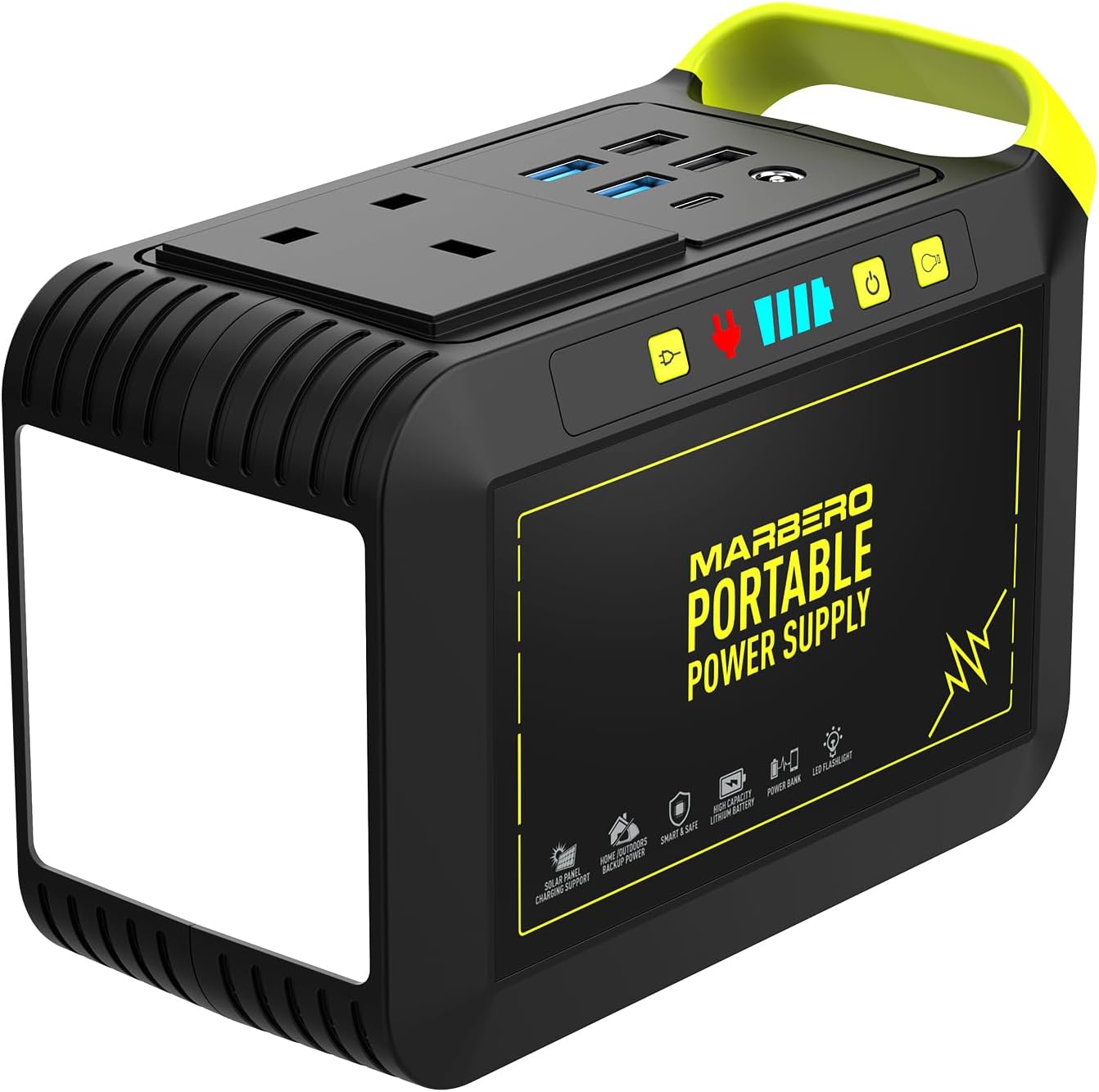
- Weighs just 1.04 kg. Fits in a rucksack pocket.
- Seven outputs including a plug socket. USB-C PD as well.
- Built-in LED torch with SOS mode. Handy on a dark campsite.
- Really a big power bank with a socket. Not a home backup.
- Slow 5-hour wall charge. Only 80W from the socket.

- LiFePO4 battery chemistry. Built for long service life.
- Full AC charge in 1.5 hours. USB-C and solar charging too.
- Orange TPU bumpers. Protection against knocks and scratches.
- Only one AC output. Fewer sockets than most here.
- No editorial backing found. Judged on its listing alone.
In-Depth Reviews of Our 10 Power Station Picks
What each spec means for a power cut, a campsite pitch or a garden with no outdoor socket, and where each unit falls short. Picks without editorial backing are judged on their listings.
#1 · Editor's Choice
Anker Solix C1000 Gen 2 1024Wh 2000W Portable Power Station
If I could only keep one unit in the cupboard under the stairs, it would be this one, and it had editorial backing in my research too. The C1000 Gen 2 pairs a 1024Wh LiFePO4 battery with 2000W of continuous output and 3000W peak, spread over nine ports, and Anker lists a full recharge in 49 minutes at 1,600W. The UPS switchover is under 10 ms, so a router barely notices a cut. The downside is that the fastest charging has to be enabled in the Anker app, and at 11.3 kg it's a two-handed lift, heavier than the EcoFlow.
The verdict: The best power station here for most homes and campsites, provided you're happy to use the app for its quickest charging.
#2 · Runner-Up
Jackery Explorer 1000 v2 1070Wh 1500W LiFePO4 Portable Power Station
Picture a campsite pitch without electric hook-up, Scout asleep in the porch and a coolbox humming: that's where a 1070Wh Jackery earns its keep. The Explorer 1000 v2 gives 1500W continuous and 3000W surge, one-hour emergency charging through the app and a 30 dB quiet charging mode for overnight top-ups. It also has 100W USB-C in and out. I'd have liked more sockets, though, because the listing shows only two AC outlets among its six ports, half what the Oupes offers.
The verdict: A well-proven Jackery portable power station for camping and power cuts. Count your plugs before you buy.
#3 · Quiet-Running Pick
DJI Power 1000 V2 1024Wh LFP Portable Power Station
DJI's listing tells you almost nothing beyond the headline 1024Wh LFP battery, which is why this sits third rather than higher despite editorial backing. The spec fields that do exist contradict each other on output, so I'd check DJI's own figures before buying, and the unit weighs 13kg, more than the Anker. What it does have is two 140W USB-C ports, useful for laptops, and a listed very quiet running mode. With only a handful of buyer reviews on the listing so far, it's also the least proven of the big names here.
The verdict: A capable 1kWh unit hidden behind a thin listing. Check the full specs with DJI first.
#4 · Best for Home Backup
Bluetti Elite 100 V2 1024Wh 1800W Portable Power Station
Home backup is where this one fits best. The Elite 100 V2 has a 1024Wh LiFePO4 battery, 1800W of continuous output and a UPS switchover under 10ms, so a desktop PC and router ride through a cut without rebooting. Bluetti lists a full recharge in about 70 minutes at 1200W and a 30dB silent mode, which matters if it sits in a bedroom during an overnight outage. My only reservation is Power Lifting: Bluetti mentions kettles, but UK kettles usually draw more than 1800W, so I wouldn't rely on it the way you might with the Anker's bigger output.
The verdict: A quiet, compact home backup unit. Ideal beside a home office desk, less so for heating appliances.
#5 · Best for Camping
EcoFlow River 2 Pro 768Wh LiFePO4 Portable Power Station
The walk from my car to the allotment shed is long enough that weight decides what comes with me, and at 7.8kg the River 2 Pro is the lightest proper power station in my top ten. You get a 768Wh LiFePO4 battery, 800W of AC output (1600W with X-Boost for some higher-draw devices), eleven outlets and a full AC recharge in about 70 minutes. Solar at 220W refills it in 3.5 hours. Less capacity than the Jackery means shorter evenings, so it's a weekend unit rather than a long-outage one.
The verdict: The easiest unit here to carry to a campsite or allotment. Choose a 1kWh model for long power cuts.
#6 · Best Value
Oupes Mega 1 1024Wh 2000W Portable Power Station
Most 1kWh units stop at 1kWh. The Mega 1 doesn't, because the Oupes B2 extra battery takes it to 5120Wh, which turns a camping unit into something closer to a home backup system. Out of the box you get 1024Wh of LFP, 2000W continuous with 4500W surge across four AC outlets, and 0-80% in 36 minutes on AC. The UPS switchover is listed at 20ms, slower than the Anker's, and the listing doesn't give a clear weight.
The verdict: Strong value if you want to start at 1kWh and add capacity later.
#7 · Most AC Sockets
Allpowers R1500 Lite 1056Wh 1600W Portable Power Station
Four AC outlets is the headline here, and in a garden that matters more than it sounds: hedge trimmer battery on charge, lights on the patio and a laptop all at once. The R1500 Lite pairs that with a 1056Wh LiFePO4 battery, 1600W continuous and a one-hour emergency charge via the app. No UK roundup I read mentioned it, and the listing's weight figures disagree with each other, so treat it as a spec-led pick.
The verdict: Plenty of sockets for the money, chosen on its listing rather than reviews.
#8 · Best Mid-Size Pick
Ezviz PS600 616Wh Portable Power Station with USB-C Fast Charging
Smaller and simpler than the 1kWh picks, the PS600 is the sort of unit that lives in a garage until a weekend away or a power cut. The title gives 616Wh, though other listing fields say slightly less, with 600W of AC output, nine ports and a built-in LED light. Ezviz rates the battery for 1000 cycles to 80%, well short of the LFP units here. It's also a brand-new listing with no track record.
The verdict: A mid-size option for occasional use, with more caveats than the bigger names.
#9 · Biggest Capacity
Aferiy P310 3840Wh 3600W Expandable Portable Power Station
Portable is a generous word for the P310. It has a 3840Wh LFP battery, 3600W of output and room to grow to 11520Wh, but the listing's weight figures, though inconsistent, both describe something you wheel rather than carry. It suits a garage-based backup for long outages. No reviewer covered it, and solar panels aren't in the box.
The verdict: A big home backup battery, not a camping companion.
#10 · Best Budget
Panana 333Wh 300W Portable Power Station with AC, DC and USB
Small, cheap and easy to carry, the Panana suits phones, lights and a laptop on a camping trip. It offers 333Wh, 300W of pure sine wave output and recharging from the wall, a car or solar. Two things give me pause. The listing gives a 60 Hz output frequency, not the UK's 50 Hz, and it doesn't say whether the sockets are UK 3-pin.
The verdict: Check the sockets and frequency before buying. Fine for small electronics only.
How We Researched and Scored These Power Stations
We didn't run these ten units through a lab or a staged blackout. The ranking is built from UK editorial roundups, manufacturer spec sheets and amazon.co.uk listings, checked against one another. Where a listing contradicted itself, as several did on weight and capacity, I used the figure in the product title or left it out.
What we compared for every unit:
- Editorial backing, and which picks have none.
- Battery capacity in watt-hours and battery chemistry (LiFePO4 or other lithium).
- Continuous and surge AC output in watts.
- AC, solar and car recharge times, as listed.
- Number and type of outputs, and whether the listing confirms UK 3-pin sockets.
- What each spec means for a UK power cut, a campsite pitch or a garden project.
How we weighted the scores:
- Capacity and output (30%): watt-hours, continuous watts and surge.
- Charging (20%): AC recharge speed and solar input.
- Practicality (20%): weight, ports and backup features such as UPS.
- Battery longevity (15%): chemistry and listed cycle ratings.
- Evidence (15%): editorial backing versus listing-only claims.
What to Look For in the Best Portable Power Station for UK Homes
Choosing the best portable power station UK buyers can rely on comes down to two numbers. Capacity, in watt-hours, is how much energy is stored; output, in watts, is how much it can deliver at once. A 1024Wh unit like the Anker or Bluetti can keep a router, lamps and phones going through an evening cut, while a 768Wh model like the EcoFlow is lighter for camping but empties sooner. Divide the capacity by the watts of what you want to run for a rough runtime, then knock a little off for conversion losses.
Output decides what you can plug in at all. Anything that heats, such as a kettle, toaster or hair dryer, draws a lot, so check its rating against the station's continuous watts, not the surge figure. LiFePO4 (also called LFP) batteries are heavier but rated for thousands of cycles, which is why most picks here use them. Check the listing photos for UK 3-pin sockets too, because several listings don't confirm them, and never wire a power station into your home's circuits yourself.
Solar charging is useful for camping and allotments, but panels are almost always sold separately, so factor that in. Cheap units around 300Wh suit phones and lights, mid-size models around 600Wh to 800Wh cover weekends away, and 1kWh-plus stations are the ones to buy for power cuts. If you want one unit that does a bit of everything well, buy the Anker Solix C1000 Gen 2 and call it a day.
Key Specs Compared
| Product | Capacity | AC Output | AC Recharge | Our Score |
|---|---|---|---|---|
| Anker Solix C1000 Gen 2 1024Wh 2000W Portable Power Station | 1024Wh LiFePO4 | 2000W | about 49 min at 1600W AC | 9.8 |
| Jackery Explorer 1000 v2 1070Wh 1500W LiFePO4 Portable Power Station | 1070Wh LiFePO4 | 1500W (3000W surge) | 1 hour emergency charge via app | 9.6 |
| DJI Power 1000 V2 1024Wh LFP Portable Power Station | 1024Wh LFP | Not listed | 0-80% in about 37 min | 9.5 |
| Bluetti Elite 100 V2 1024Wh 1800W Portable Power Station | 1024Wh LiFePO4 | 1800W (2700W lifting) | about 70 minutes | 9.3 |
| EcoFlow River 2 Pro 768Wh LiFePO4 Portable Power Station | 768Wh LiFePO4 | 800W (1600W X-Boost) | 0-100% in about 70 min | 9.1 |
| Oupes Mega 1 1024Wh 2000W Portable Power Station | 1024Wh LFP | 2000W (4500W surge) | about 1 hour on AC | 9.0 |
| Allpowers R1500 Lite 1056Wh 1600W Portable Power Station | 1056Wh LiFePO4 | 1600W | about 1 hour on AC | 8.9 |
| Ezviz PS600 616Wh Portable Power Station with USB-C Fast Charging | 616Wh | 600W | Not listed | 8.8 |
| Aferiy P310 3840Wh 3600W Expandable Portable Power Station | 3840Wh LFP | 3600W | about 1.5 hours on AC | 8.7 |
| Panana 333Wh 300W Portable Power Station with AC, DC and USB | 333Wh | 300W | Not listed | 8.6 |
Frequently Asked Questions
What brand of power station is the best?
Anker, Jackery, EcoFlow and Bluetti are the names that come up most in UK roundups, and all four make solid 1kWh models. Our top pick is the Anker Solix C1000 Gen 2. Lesser-known brands can offer more capacity or sockets for the money, but they usually have less editorial backing behind them.
Is Jackery or Anker better for a portable power station?
On the models in this list, Anker edges it. The Solix C1000 Gen 2 offers 2000W of output against the Jackery Explorer 1000 v2's 1500W, plus more ports. The Jackery has slightly more capacity at 1070Wh and a well-proven range, so it's a close call for camping.
Which power station is best for home use?
For home backup, choose a 1kWh-plus LiFePO4 unit with a fast UPS switchover. The Bluetti Elite 100 V2 and Anker Solix C1000 Gen 2 both list switchovers under 10ms. For long outages, the expandable Oupes Mega 1 or the huge Aferiy P310 hold far more energy.
What size power station do I need for a power cut?
Add up the watts of what you want to run and multiply by the hours you need. Lights, a router and phone charging are modest loads, so a 1024Wh unit covers an evening comfortably. Running a fridge or a home office for longer calls for more capacity or an expandable model.
Can a portable power station be charged with a solar panel?
Yes, most picks here list solar charging, though panels are usually sold separately. Input limits vary widely: the Bluetti accepts up to 1000W, the Anker up to 600W and the EcoFlow 220W. Match the panel to the station's input rating and connector before you buy.
How long does a power station take to recharge?
From the mains, the fastest units here refill in about an hour. The Anker lists 49 minutes, the EcoFlow and Bluetti about 70 minutes, and the Oupes reaches 80% in 36 minutes. Small units take longer, with the mini Marbero needing about 5 hours from the wall.
The Bottom Line
For most homes and campsites, the Anker Solix C1000 Gen 2 is the power station I'd buy: 1024Wh, 2000W of output and a quick recharge, with the caveat that its fastest charging runs through the app. If you'll carry it often, the lighter EcoFlow River 2 Pro is the camping choice, and for home backup the quiet Bluetti Elite 100 V2 suits a desk or bedroom.
As an Amazon Associate I earn from qualifying purchases. See our affiliate disclosure for details. Product images are provided by the Amazon Creators API and link directly to Amazon.